
The Origins of Bachata
Bachata is a genre of Latin music and dance that originated in the Dominican Republic during the early 1960s. Born in the rural neighborhoods and barrios of Santo Domingo, bachata started as the music of the working class. Raw, emotional, and deeply personal. The genre was initially looked down upon by mainstream Dominican society, considered too rough and lower-class for radio play. Despite this, it flourished in small bars, colmados (corner stores), and house parties, carried by the voices of artists who sang about love, heartbreak, and everyday struggle.
The word "bachata" originally referred to a casual gathering or party, a place where friends and neighbors came together to drink, eat, and listen to music. Over time, the term became synonymous with the genre itself. The foundational sound of bachata revolves around the requinto (lead guitar), segunda (rhythm guitar), bass guitar, bongos, and güira, a metal scraper that gives the music its distinctive scratching rhythm.
Bachata's Rise to Global Popularity
For decades, bachata remained underground. It wasn't until the 1990s and early 2000s that artists like Juan Luis Guerra, Aventura, and Romeo Santos brought bachata into the international spotlight. Juan Luis Guerra's album "Bachata Rosa" was a turning point, it won a Grammy and proved that bachata could be sophisticated, artistic, and commercially successful. Aventura, a group from the Bronx led by Romeo Santos, fused bachata with R&B, hip-hop, and pop, creating a modern sound that resonated with younger audiences worldwide.
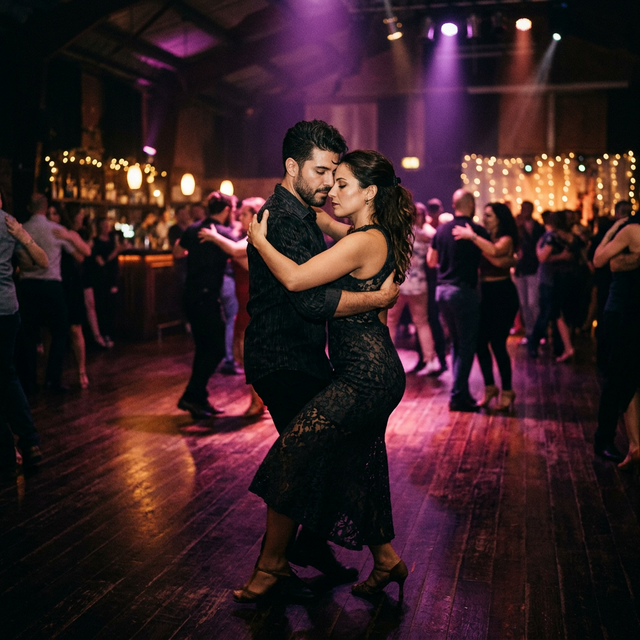
Today, bachata is one of the most popular social dances in the world. From New York to Tokyo, from London to São Paulo, you'll find bachata socials, dance events where hundreds of people gather to dance bachata, salsa, and kizomba throughout the night. The global bachata community is vibrant and growing, with festivals, congresses, and workshops happening in nearly every major city.
Styles of Bachata
Bachata has evolved into several distinct styles, each with its own character:
Traditional / Típico Bachata is the original Dominican style. It features fast footwork, playful partner interaction, and raw guitar-driven instrumentation with a driving güira rhythm. This is the most authentic form, still widely danced in the Dominican Republic.
Sensual Bachata is a modern evolution that emerged from Spain and Europe in the 2010s. Sensual bachata emphasizes body movement, waves, isolations, dips, and close connection with your partner. The music tends to be smoother, with modern production, lush pads, and emotional melodies. Tracks like "De Noche / De Día" by Pulso Bachata are crafted specifically for this style.
Bachata Moderna is a hybrid that blends traditional footwork with sensual elements. Dancers mix Dominican-style turns and footwork patterns with body movement and musicality. This is the most commonly danced style at international bachata socials.
Bachata Romántica is a softer, more romantic subgenre focused on love ballads and smooth melodies. Artists like Romeo Santos and Prince Royce are pillars of this style, which crosses over heavily into Latin pop.
The Dance
Bachata is danced in a closed partner hold at its most social. The basic step is a simple three-step pattern with a tap on the fourth beat, moving side to side or forward and back. From there, dancers add turns, body rolls, head rolls, and intricate footwork depending on the style. What makes bachata special is its accessibility, beginners can start dancing socially within their first lesson, while advanced dancers can spend years mastering musicality, connection, and creative expression.
The connection between partners is central to bachata. Unlike other Latin dances that emphasize flashy moves or acrobatics, bachata is about feeling the music together, interpreting the guitar, the vocal phrasing, and the emotional peaks of a song through movement. This is what draws millions of people to bachata dance floors worldwide.
The Future of Bachata Music
Bachata continues to evolve, with new sounds and production styles pushing the genre forward. Projects like Pulso Bachata are exploring fresh approaches to bachata production, blending traditional guitar patterns, bongo rhythms, and Spanish vocals with modern techniques. The result is a constant stream of new tracks for dancers to practice and perform to. Whether you're a beginner learning your first basic step or an advanced dancer looking for new music to interpret, the bachata world keeps growing with exciting new sounds.